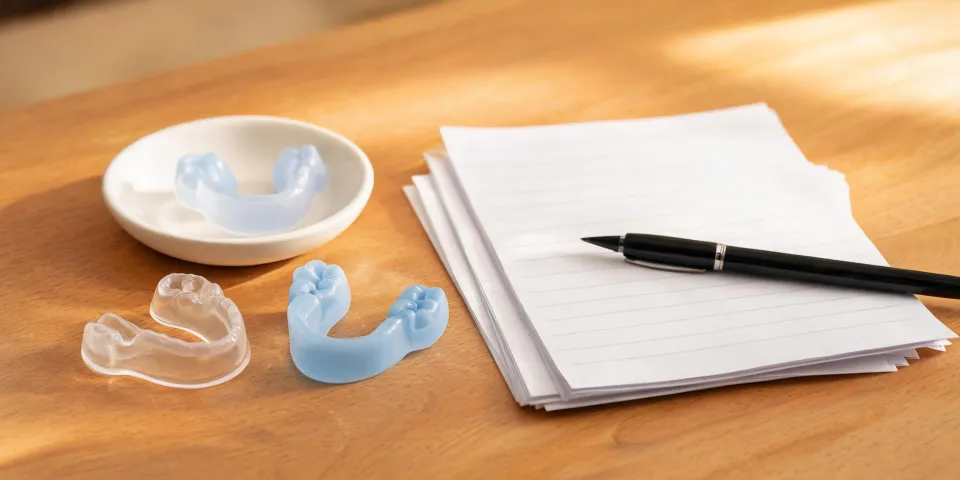
The most expensive mouthguard in the athletic category arrives with a condition that no sample box can satisfy: a dental visit. Custom mouthguards can be fully customized and can give an athlete an optimal fit, and the same category guidance puts them at the top of the price range and ties them to in-person fitting and customization. That combination is the whole story for a sourcing team, because the thing you are approving is not a shell in a bag. It is a workflow that either exists or does not.
I read that guidance twice and found the part most briefs skip. The claim that custom is the most protective option is attributed to what many people believe, and the text that follows it says other mouthguards can be effective if they are properly fabricated and consistently worn. That pairing changed what I would approve. A comfortable, clean-looking sample proves the supplier can mold something; it does not prove anyone recorded a mouth, fitted a device to it, or that the wearer will keep the thing in during play.
Why Custom Fit Is a Workflow Claim
The category description breaks into three usable statements: custom mouthguards can be fully customized and provide an optimal fit with adaptability and efficacy; they are the most expensive option and require dental visits for fitting and customization; and they can be customized to the requirements or personal preferences of the user. Read together, those statements describe a device that only exists after someone records an individual mouth and shapes material to that record. The product sits downstream of a procedure.
That ordering matters when a sample lands on a QC bench. A finished guard shows color, edge finish, case quality, and whether a printed name sits straight. I noticed the wording itself draws the line: the fit claim is attached to full customization, and full customization is attached to the dental visit. Nothing on the sample's surface tells a reviewer whether it was built from a recorded dentition or pulled from a shelf and photographed beside a logo card.
The protection sentence needs the same discipline. The guidance reports that many consider custom the most protective option, then states plainly that other mouthguards can be effective if properly fabricated and consistently worn. Consistency is the piece a sourcing team can actually influence through paperwork, because a guard that feels wrong or shifts during play tends to stay in the bag. A device that is not worn is not doing the job the purchase order assumed it was buying.
Preference Choices That Do Not Prove Fit
Requirements and personal preferences share one sentence in the guidance, which is precisely why sample briefs blur them. Color, printed name, logo placement, and carry case belong on a preference list. They are real decisions and they deserve sign-off, but they close on a photograph. Fit-critical items are a different species: which individual the record belongs to, who took it, when it was taken, what document travels with the sample, and what happens when the device does not seat.
"We customized it" is a scope statement. It says the supplier accepts design input and can vary a build to a buyer's direction. It does not say anyone checked the result against a mouth, and it does not say the sample you are holding came from the same production line as the units you will reorder. Buyers get burned here because the phrase sounds like a fit claim and reads like a capability claim, and the two get filed in the same folder.
Two lists, one file. A preference item can close on a photo; a fit item cannot close without a record behind it. When a brief has only one list, every checkbox feels equally finished, and the sample gets approved on the strength of the easy ones.
The Fit Check I Would Run
I would run this as a desk check, not a bench test. I have no sample in hand and no supplier records in front of me, so everything below is a plan with stated conditions rather than a result, and I would write it into the brief with that same label so nobody downstream mistakes the plan for a pass.
The first move is to name the fitter and the document. The brief would require the supplier to state who performed the fitting, in what setting, and which record accompanies the sample. A sample with no named fitter is unverifiable, not because the fitter is likely to be careless, but because nothing in the file lets a reviewer separate a device built to a recorded mouth from a stock shell that photographs well under a phone light.
The second move splits the checklist. Fit-critical lines stay blank until the record arrives; preference lines can close on inspection. I would write the split into the template itself so a reviewer cannot quietly promote a color approval into a fit approval on a busy Friday.
The third move asks what the sample represents. A build from one athlete's record, a generic model, and a size run answer three different questions, and the same bag can hold any of them. Preference lists are easy to fill. What is hard, and what the brief should demand, is a sentence from the supplier describing exactly what production unit this sample stands for and what it does not.
Results That Should Reject the Sample
I would suspend a provisional approval on four observations: the file has no documented professional fitting pathway; preference approvals are being used as fit proof; the supplier cannot identify who fitted the sample or what the sample represents; or a protection claim goes past what the category guidance supports. Any one of those turns a pending yes into a hold, and the hold lifts when the missing piece arrives, not when someone senior gets impatient.
The fourth one deserves its own paragraph because it fails quietly. If an internal brief or a supplier deck states that the custom sample is more protective than every other mouthguard type, that statement runs past the guidance, which attributes the view to many and keeps the door open for other types that are properly fabricated and consistently worn. Overreach on protection is a documentation defect, and a documentation defect in a sourcing file has a way of becoming a marketing claim on a retail page.
Missing paperwork suspends. Contradicted paperwork rejects. A supplier who says the sample came from a fitted athlete's record and then cannot produce the record is not behind on documentation; that is a different answer than the one that was sold, and the brief should say so in advance so nobody has to argue about it later.
Supplier Questions the Brief Must Leave Open
No quote, minimum order, lead time, capacity figure, customization authority, or sample measurement should be filled in by assumption. Nothing here is a supplier commitment, a price point, or a factory capability. The gaps stay visible on purpose.
The open list is short and blunt. Unit price at the volumes you actually forecast. Minimum order. Lead time measured from approval, not from inquiry. Monthly capacity at the finish you specified. Which design elements the factory will genuinely change and which are fixed tooling. Who performs the fitting and where it happens. What documentation ships with the sample. Whether the submitted sample is a one-off build or a representative production unit. And what the remake terms are if the device does not seat.
Leaving those open protects the buyer more than filling them early. A number invented in a brief becomes a number a factory is measured against, and the argument that follows is about who wrote it down, not about what the process can actually deliver. Blank cells are honest. Guessed cells are a future dispute with a date stamp.
Who Should Not Approve This Sample
This brief is not for a buyer who cannot document a professional fitting pathway, and it is not for a buyer who wants one generic size to cover a whole roster. The guidance ties custom work to dental visits for fitting and customization, so if that pathway is unavailable to your end users, the custom route loses the justification that made it worth the highest price in the category. You would be paying premium money for a procedure nobody performs.
It is for the sourcing team that will hold two lists, keep the fit column empty until the record arrives, and let a preference approval mean only what it says. If that is your desk, the next action is small: open the sample brief, add a line for who performed the fitting, and leave it blank until the supplier answers.
