-
What a Wrong Instruction Handoff Costs You
-
What a Custom Mouthguard Is, in One Line
-
Where Custom Stops and Boil-and-Bite Starts
-
Why One Instruction Card Cannot Cover Both
-
One Purchase Order, Two Fitting Paths
-
What the Handoff Packet Must Ask the Supplier
-
A Skeptic Says Fit Is the Dentist's Problem
-
One Check Before the Order Is Released
The expensive part of a custom mouthguard order rarely shows up on the invoice. It shows up a month later as a second dental appointment and a re-booked fitting slot, because the sheet that shipped with the units described a step belonging to a different product. Custom fabrication happens in a dental visit; a purchase order cannot compress that visit or hand it to the wearer.
The handoff, not the material and not the unit price, is what fails in these orders. The custom path runs through a dental professional; the boil-and-bite path runs through the manufacturer's own heating and molding instructions. Put both on one card with a checkbox at the top, and the step that decides whether the guard is ever worn properly ends up owned by nobody.
What a Wrong Instruction Handoff Costs You
Custom mouthguards sit at the top of the cost range among athletic mouth protectors, and the reason is structural rather than cosmetic: the customization and the fitting are delivered through dental visits, not through a stock item pulled off a shelf.
Follow that structure and the budget leak becomes visible. A wearer holding instructions for the wrong path does one of two things: turns up at the clinic with a unit the clinic will not work on, or skips the visit and self-fits a device that was never built to be self-fitted. The first burns a booked slot; the second wastes the fabrication, because the record the custom unit was built from never gets used. Rework in that chain lands on your calendar and your freight account rather than the factory's, since nothing was manufactured wrong.
What the repeats total depends on your quotes and your calendar, and no figure for it appears here, because the category guidance carries none. The structural point is only that the money concentrates in the appointment chain, not in the blank.
What a Custom Mouthguard Is, in One Line
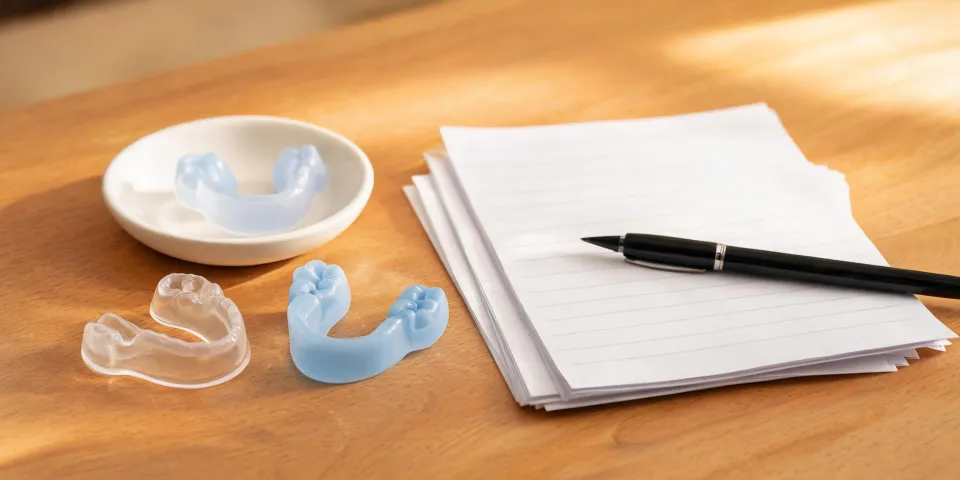
A definition a specification can quote: a custom mouthguard is an athletic mouth protector fully customized to the individual wearer, giving an optimal fit with adaptability and efficacy, at the highest cost point among mouthguard options, with fitting and customization handled through dental visits.
That sentence does real work in a purchase file. It pins fit to the individual wearer, makes the visit part of the process rather than an optional extra, and attaches the price premium to that process so nobody in the approval chain is surprised later. It also has a boundary: this is category-level educational guidance about athletic mouthguards from a dental association, not a certificate for any particular supplier's finished product, and it does not transfer automatically onto whatever a given factory ships.
Where Custom Stops and Boil-and-Bite Starts
On the custom side, the defining step is the dental visit. Fitting and customization are performed there, so the record of the wearer's bite and the judgment about fit come from a dental professional, not from a packing slip and not from whoever opens the box. No amount of well-written factory paperwork replaces that visit.
On the boil-and-bite side, the product is a thermoplastic mouthguard adapted by heating and molding, and that adaptation should be carried out according to the manufacturer's instructions so the material is heated and molded properly. Imprecise or superficial shaping to the wearer's bite can produce a poorly fitted device. That procedure belongs to whoever wrote the instructions for that exact product.
You will notice this article carries no universal heating time, no temperature and no trimming figure. That is deliberate: the correct values live in the instructions for the specific product, and a number borrowed from a different mouthguard is a guess with a safety consequence attached. If you are writing the spec, request the manufacturer's written adaptation instructions per SKU rather than pasting a shared number into the purchase order.
Why One Instruction Card Cannot Cover Both
That sounds tidy on paper: one card, one checkbox, two product lines, less printing and one fewer document to track. The trouble is that the two paths hand the decisive step to different owners. Custom routes it to a dental professional who takes the record and fits the unit. Boil-and-bite routes it to whoever holds the manufacturer's heating and molding instructions, and that person is neither a clinician nor the factory.
Here is the rub, and it is a paperwork problem rather than a materials problem. A merged card cannot name both owners on the same line without splitting, and once it splits it is no longer a merged card. What survives is usually a phrase like fit as directed, followed by silence about whose direction is meant. Then either the clinic is asked to do something outside its role, or the wearer improvises with a heat source at home. Neither is fixed by upgrading the material.
One Purchase Order, Two Fitting Paths
Suppose a club buys a custom line for its contact-sport athletes and a boil-and-bite line for a youth program, and both land on the same purchase order. The packet gets copied across both lines, because copying is what happens when the ship date is close and the person assembling the paperwork has two SKUs and one afternoon.
Watch where the confusion lands. The clinic receives a finished custom unit alongside a heating instruction that has no application to it. A parent receives a dental-visit requirement attached to a thermoplastic unit no clinic will schedule. Quality control then receives returns it cannot attribute to either line, because the paperwork never carried a line identifier. Each case fails at a different step; the cause is the same: one sheet, two owners, no split.
What repairs the scenario is line-specific packets: the custom unit's paperwork speaks only about the visit and the wearer's follow-up, the boil-and-bite unit's paperwork speaks only about the manufacturer's own adaptation steps. Nothing here was measured; it is a walk-through of how paperwork breaks, not a supplier case.
What the Handoff Packet Must Ask the Supplier
The commercial questions come first, as questions rather than assumptions: unit price, minimum order quantity, lead time, production capacity, who actually holds customization authority, whether the factory will accept a bite record produced by your clinic, and who signs off on the model before production starts. Add one more: whether a physical sample can be measured on your side before approval, with the acceptance items written down in advance.
Then ask for the documents only the supplier can produce: the supplier's own written fitting and wear instructions for each SKU, and, in writing with the standard named, whatever certification the finished custom product actually holds. Do not accept a reference brand's approvals as a substitute for your order. A competitor's certificate does not travel with your shipment, and a supplier's reputation is not a warranty on the units you receive.
Keep the two answerable halves apart. Category guidance establishes what a custom mouthguard is and that the custom path runs through dental visits; everything specific to your order, from price to quantity to who may alter the model, is answerable only by the supplier, and only in writing. Leave an unanswered line unanswered rather than filling it with an industry assumption.
A Skeptic Says Fit Is the Dentist's Problem
A skeptic would say the clinic owns the fit, so once the appointment is booked and the unit comes back, procurement is finished and wear compliance is somebody else's concern. The educational message from the professional side cuts the other way: the best mouthguard is one that is properly worn during sport activities. A well-fitted guard left in the bag during play is not delivering what the order bought.
So the buyer keeps a piece of it. Who checks that the unit still sits correctly after a growth spurt. Who re-orders a lost unit mid-season rather than waiting for the next cycle. Who confirms the wearer still uses it at practice and not only on game day. Those are specification lines with named owners, not courtesy notes, and none of them is a promise that wearing a guard prevents injury.
One Check Before the Order Is Released
Before release, get one signed line in the packet: the named owner of each instruction step, clinic or factory or wearer, attached to the specific product line it belongs to. Not the price, not the material, not the delivery date. Price and material can be renegotiated later; a step with no owner cannot be recovered once the units ship, because its failure surfaces weeks later at a fitting appointment rather than at goods-in.
Ask for that line in writing before you commit. If a supplier cannot name who owns the fitting step on the custom line and who owns the heating and molding step on the boil-and-bite line, the packet is not finished, whatever it says about price.
